


Lucretia Lighting’s LED Profile Extrusions collection offers aluminium channels and mounting profiles designed for LED strip lighting. Recessed, surface and corner profiles with opal diffusers help create clean, continuous lines of light while hiding the strip and improving heat dissipation. Ideal for joinery, cabinetry, ceilings, walls and display lighting in residential and commercial projects, these LED strip channels provide a professional, durable finish for your linear lighting layouts.




FAQs
An LED aluminium profile, also known as an LED strip channel or LED extrusion, is an aluminium housing designed to hold and protect LED strip lighting.
The profile provides a professional installation finish while helping to manage heat generated by the LED strip. Most systems can also be fitted with an opal or diffused cover to create a softer, more continuous line of light.
LED profiles are commonly integrated into ceilings, walls, joinery, cabinetry, shelving, staircases and architectural details in residential and commercial projects.
Installing LED strip inside an aluminium profile can significantly improve both the appearance and performance of the installation.
The aluminium profile helps to dissipate heat, protect the LED strip and provide a clean mounting surface, while a diffuser can reduce visible LED dots and create a smoother line of illumination.
It also allows LED strip lighting to be integrated more precisely into architectural and joinery details.
For professional architectural lighting, the LED strip, aluminium profile and diffuser should be selected together rather than treating the profile simply as an accessory.
The difference is primarily how the aluminium profile integrates with the surrounding surface.
Recessed LED profiles sit inside a prepared channel in the ceiling, wall, cabinetry or joinery.
Surface mounted LED profiles attach directly onto the finished surface and are useful where creating a recessed channel is not practical.
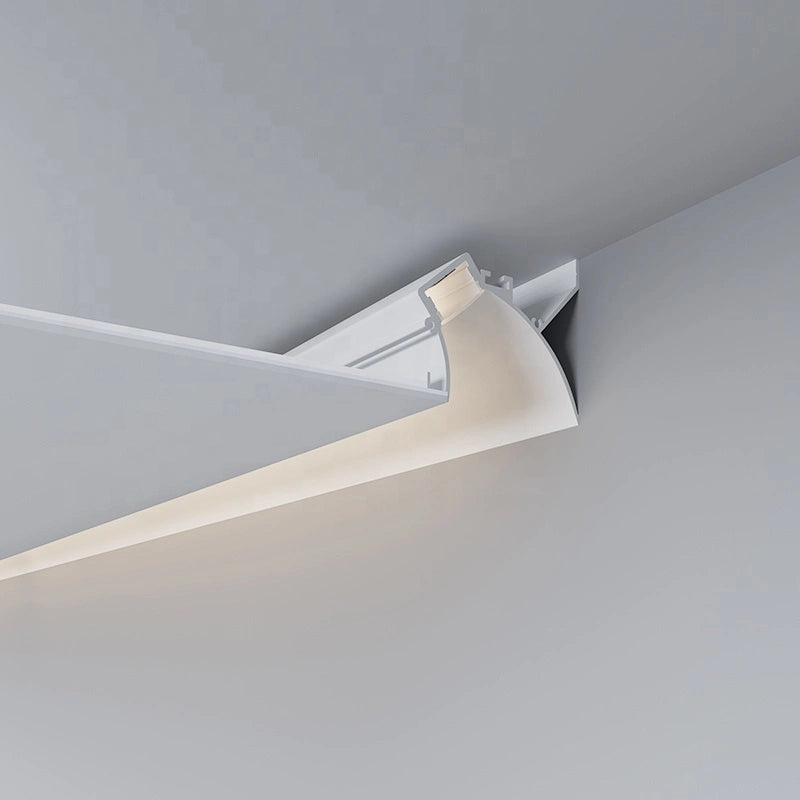
Trimless LED profiles are designed to be integrated into plasterboard or other architectural finishes so the aluminium edges become concealed, leaving only the illuminated line visible.
Trimless profiles are particularly popular in contemporary and minimalist interiors where a seamless architectural finish is required.
The profile must first be physically compatible with the LED strip.
Important factors include:
- Internal profile width
- LED strip width
- Profile depth
- Diffuser type
- LED density
- Wattage and heat dissipation requirements
- Installation method
- Required lighting effect
A shallow profile may be suitable for cabinetry or shelving, while a deeper profile can provide greater distance between the LEDs and diffuser, helping create a smoother line of light.
For high-output or multi-row LED strips, a larger aluminium profile may also be required for appropriate heat management.
A smooth, dot-free line of light depends on the combination of the LED strip, aluminium profile and diffuser.
Using a high-density or COB LED strip can significantly reduce visible individual LED points.
Profile depth is also important. Increasing the distance between the LED strip and diffuser allows the light to blend before reaching the visible surface.
An opal diffuser can further soften and homogenise the light.
For architectural projects where a completely continuous appearance is important, the LED strip and profile should therefore be specified as one complete lighting system.
Corner LED profiles are designed to position LED strip lighting at an angle between two surfaces.
They are commonly used inside cabinets, wardrobes, shelving, display units, kitchens and architectural corners where directing the light outward at an angle produces a better result than mounting the LED strip flat against one surface.
Corner profiles can also help conceal the light source from normal viewing angles, creating a softer indirect lighting effect.
The required profile angle and dimensions should be selected according to the joinery detail and the area that needs to be illuminated.
Yes. Recessed and trimless LED profiles can be integrated into plasterboard ceilings and walls to create architectural lines of light.
Depending on the profile, the result can range from a narrow continuous light line to a wider illuminated architectural feature.
Profiles can be used to create straight lines, wall-to-ceiling details, perimeter lighting, wall washing and other integrated lighting effects.
For trimless installations, the profile should be coordinated with the builder or plasterer before the final ceiling or wall finish is completed.
Yes. LED aluminium profiles are available in specialised forms for different architectural applications.
These can include staircase profiles, handrail LED profiles, cabinet profiles, wall profiles, wall-washing profiles and profiles designed specifically for joinery integration.
Stair and handrail profiles can provide integrated illumination for circulation areas, while cabinet and joinery profiles can create concealed task or feature lighting without exposing the LED strip itself.
The profile should be selected according to the physical construction detail as well as the required lighting effect.
Yes. Specialised curved and flexible LED profile systems can be used to create curved architectural lines rather than being limited to conventional straight installations.
Depending on the profile design, curved LED channels can be integrated into ceilings and walls to create circles, arcs, flowing lines and custom lighting shapes.
Curved profiles are particularly useful for feature ceilings, hospitality interiors, retail spaces, reception areas and other projects where the lighting needs to follow the architecture.
The required curve or radius should be considered during the design stage, as not every aluminium LED profile can be curved.
Lucretia offers a comprehensive range of LED aluminium profiles and LED strip channels in Australia for residential, commercial and architectural lighting projects.
The collection includes recessed LED profiles, surface mounted LED channels, trimless LED profiles, corner profiles, wall profiles, wall-washing profiles, curved profiles, cabinet profiles, staircase profiles and handrail LED profiles.
Different profile dimensions and installation methods are available to suit applications including ceilings, walls, joinery, cabinetry, shelving, staircases and architectural feature lighting.
For larger projects, Lucretia can assist with selecting the appropriate LED profile, LED strip, diffuser, driver and installation configuration based on architectural drawings, joinery details or reflected ceiling plans.